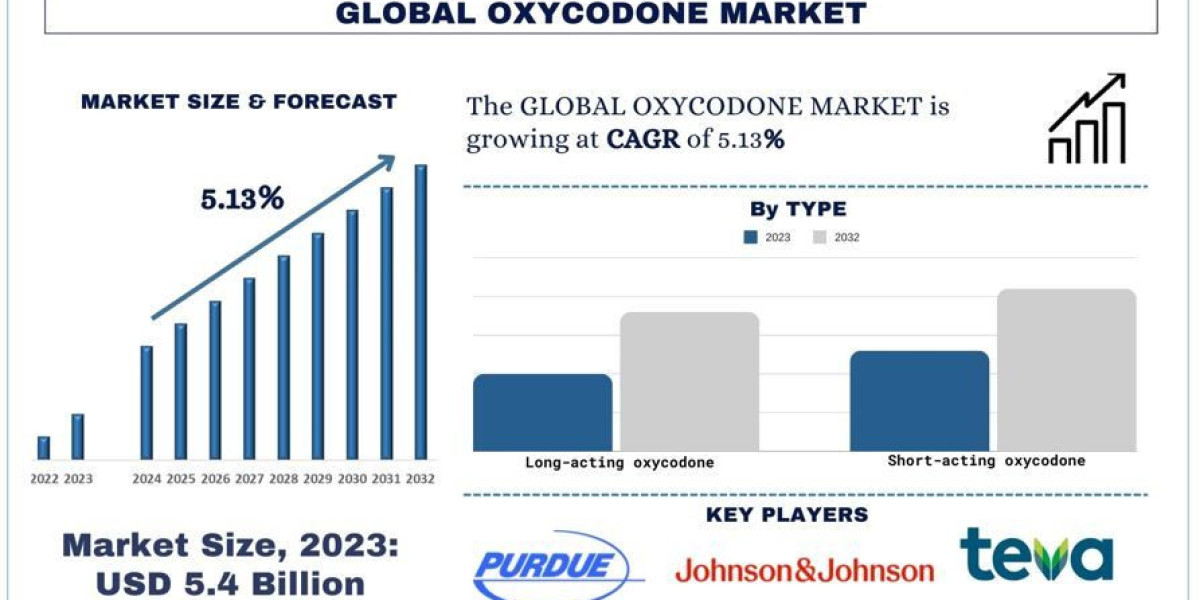

According to UnivDatos, the global Oxycodone market is being driven by the rising prevalence of chronic pain conditions, a growing elderly population, expanding use in palliative and cancer care, increasing awareness of pain management, and rising regulatory approvals for opioid-based therapies. As per UnivDatos’ “Oxycodone Market” report, the global market was valued at USD 5.4 billion in 2023 and is expected to grow at a CAGR of ~5.13% from 2024 to 2032, reaching USD billion by 2032.
Market Overview
Oxycodone is a semi-synthetic opioid analgesic belonging to the 4-phenylpiperidine class, primarily prescribed for the management of moderate to severe pain. It works by binding to opioid receptors in the central nervous system, thereby altering pain perception and response. First developed in Germany in 1916, oxycodone is chemically derived from thebaine, a naturally occurring alkaloid found in the opium poppy.
Due to its potency and clinical effectiveness, oxycodone has become an integral component of modern pain management, particularly in cases where non-opioid or weaker opioid analgesics prove insufficient.
Demand Dynamics
The demand for oxycodone is largely driven by its extensive use in managing severe and persistent pain, including pain associated with cancer, major trauma, and post-surgical recovery. It is widely prescribed in both immediate-release and extended-release formulations, enabling physicians to tailor treatment plans based on patient needs and pain severity.
Access sample report (including graphs, charts, and figures): https://univdatos.com/reports/oxycodone-market?popup=report-enquiry
However, alongside its therapeutic value, oxycodone has also been subject to misuse and non-medical consumption, contributing to opioid dependency and public health challenges. Recreational use and diversion have played a significant role in the broader opioid crisis, particularly in North America.
According to provisional data from the Centers for Disease Control and Prevention (CDC), more than 108,000 drug overdose deaths occurred in the 12 months ending April 2022. Opioids were responsible for nearly 75% of all drug overdose deaths in 2020, underscoring the dual nature of oxycodone as both a vital medicine and a substance requiring strict regulatory oversight.
Clinical Applications
Oxycodone is indicated for patients suffering from moderate to severe pain that cannot be effectively managed using alternative analgesics. By acting on opioid receptors in the brain and spinal cord, it modifies the body’s response to pain signals.
The drug is commonly prescribed for:
- Post-operative pain
- Severe traumatic injuries
- Cancer-related and palliative pain
- Chronic pain requiring long-term, round-the-clock management
Extended-release formulations are particularly beneficial for patients who require continuous pain control, as they provide a steady release of the active ingredient over prolonged periods.
Cost Structure
The cost of oxycodone varies depending on dosage, formulation, brand status, and geographic region. Both branded and generic versions are available in the market. Branded products typically command higher prices due to research and development expenses, marketing costs, and patent protections.
In contrast, generic oxycodone formulations—introduced following patent expirations—offer more affordable alternatives, improving accessibility for patients while increasing competition among manufacturers.
Manufacturing and Supply Chain
Oxycodone manufacturing involves a tightly regulated pharmaceutical process to ensure safety, quality, and compliance. Pharmaceutical companies play a central role in drug development, formulation, and large-scale production, while healthcare technology firms contribute diagnostic and monitoring tools that support pain management and treatment evaluation.
Collaboration among research institutions, manufacturers, healthcare providers, and regulatory bodies is essential to maintaining consistent supply, ensuring patient safety, and supporting innovation in abuse-deterrent formulations.
Regulatory Landscape and Public Health Considerations
The widespread misuse of opioids has prompted stricter regulations governing oxycodone prescribing, distribution, and monitoring. Policymakers and healthcare systems are increasingly focused on:
- Responsible prescribing practices
- Prescription drug monitoring programs (PDMPs)
- Abuse-deterrent drug formulations
- Patient education and addiction support services
These measures aim to balance effective pain relief with the prevention of misuse and dependency.
Click here to view the Report Description & TOC: https://univdatos.com/reports/oxycodone-market
Future Outlook
Despite regulatory and societal challenges, the oxycodone market is expected to maintain steady growth, supported by rising chronic disease prevalence, aging populations, and unmet pain management needs. Future market development will likely focus on safer formulations, improved prescribing guidelines, and integrated pain-management approaches that reduce dependency risks.
Ongoing research into alternative pain therapies and abuse-resistant opioid formulations will play a critical role in shaping the long-term sustainability of the market.
Conclusion
Oxycodone remains one of the most effective therapeutic options for managing severe pain, particularly in oncology, surgery, and palliative care settings. While its misuse has contributed to serious public health challenges, its clinical value remains significant when prescribed and monitored responsibly.
By strengthening regulatory frameworks, advancing pharmaceutical innovation, and fostering collaboration across healthcare ecosystems, it is possible to preserve oxycodone’s therapeutic benefits while minimizing adverse outcomes. As global healthcare systems continue to evolve, balanced and evidence-based approaches will be essential to ensuring safe, effective, and ethical pain management worldwide.
Contact Us:
UnivDatos
Contact Number - +1 978 733 0253
Email - contact@univdatos.com
Website - www.univdatos.com
Linkedin- https://www.linkedin.com/company/univ-datos-market-insight/mycompany/