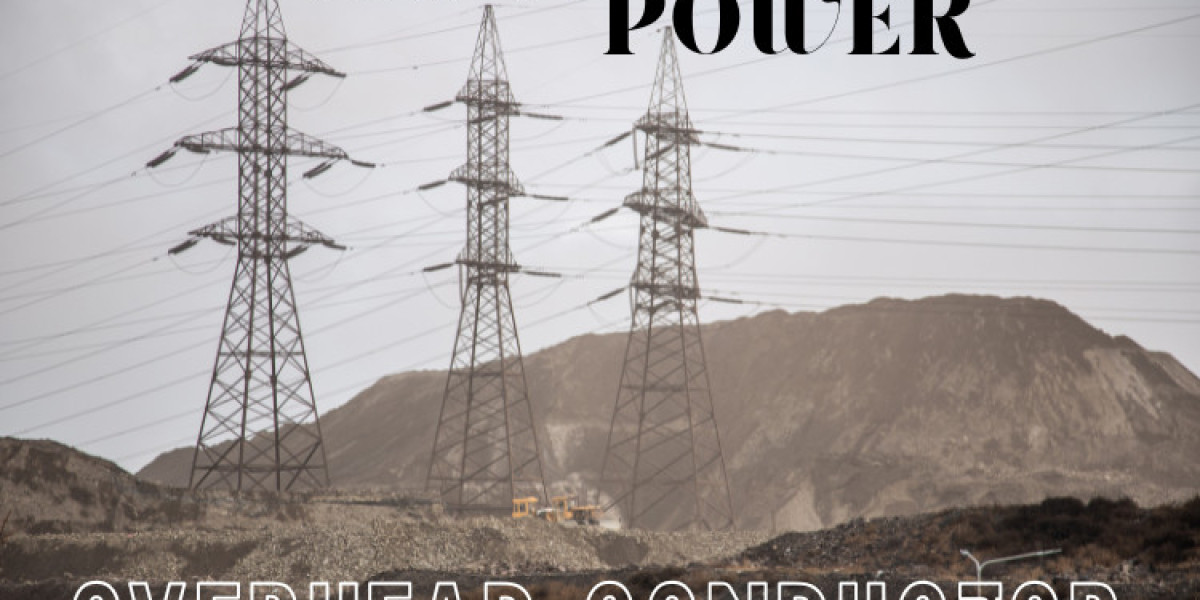

In today’s rapidly expanding power transmission and distribution networks, the overhead conductor remains one of the most critical components for ensuring reliable, efficient, and cost-effective electricity delivery. From urban distribution lines to long-distance transmission corridors, utilities and EPC contractors rely on overhead conductors that can withstand mechanical stress, thermal loading, harsh environments, and long service cycles.
As a global manufacturer of overhead conductors and power cables, HNBF Power supports utilities, grid operators, and infrastructure developers with high-quality conductor solutions engineered for real-world operating conditions. This guide explains what engineers and procurement professionals should know when selecting an overhead conductor for modern power networks and how the right choice directly impacts grid performance, safety, and lifecycle cost.
What Is an Overhead Conductor?
An overhead conductor is a bare electrical conductor installed on overhead transmission or distribution lines, typically supported by poles or transmission towers. It carries electrical energy across long distances without insulation, relying on air as the primary insulating medium.
Overhead conductors are widely used because they:
Offer lower installation cost compared to underground cables
Enable easier inspection and maintenance
Provide higher thermal dissipation
Are suitable for both medium- and high-voltage networks
Key Types of Overhead Conductors Used in Power Systems
HNBF Power manufactures a full range of standard and customized overhead conductors used in utility and industrial projects worldwide.
AAC – All Aluminum Conductor
AAC overhead conductors are made from pure aluminum strands and are commonly used in:
Urban and coastal distribution networks
Short and medium spans
Areas where corrosion resistance is critical
They provide excellent conductivity and lightweight performance.
AAAC – All Aluminum Alloy Conductor
AAAC overhead conductors use aluminum alloy strands to improve:
Mechanical strength
Corrosion resistance
Sag performance under load
They are widely applied in distribution and sub-transmission networks where strength-to-weight ratio is important.
ACSR – Aluminum Conductor Steel Reinforced
ACSR overhead conductors combine aluminum strands with a steel core, making them ideal for:
Long span transmission lines
High mechanical loading environments
Mountainous and windy regions
The steel core delivers superior tensile strength while aluminum carries the electrical current.
Why Overhead Conductor Selection Matters for Utilities and EPC Projects
Choosing the right overhead conductor is not simply a material decision—it is an engineering and economic decision that affects the entire project lifecycle.
Electrical Performance and Line Loss
Different conductor constructions influence:
Current carrying capacity
AC resistance
operating temperature limits
Optimized overhead conductor design helps utilities reduce power loss and improve overall network efficiency.
Mechanical Strength and Span Capability
Line design depends heavily on conductor tensile strength and sag characteristics. Incorrect selection can result in:
Excessive sag
Reduced ground clearance
Higher mechanical stress on towers and poles
Proper mechanical matching ensures long-term safety and regulatory compliance.
Environmental and Climatic Conditions
Overhead conductors must perform reliably under:
High wind loads
Ice accumulation
Coastal corrosion
Industrial pollution
HNBF Power designs overhead conductor solutions that are suitable for diverse climate zones and environmental conditions.
Engineering Considerations When Specifying an Overhead Conductor
Conductor Size and Stranding Design
Engineers must evaluate:
Nominal cross-sectional area
Number and diameter of strands
Compact or standard stranding
These factors directly affect conductivity, flexibility, and installation performance.
Thermal Rating and Operating Temperature
Modern networks often require higher ampacity without tower modification. Selecting an overhead conductor with appropriate thermal rating allows utilities to:
Increase power transfer capacity
Support future load growth
Maintain safe operating margins
Compatibility with Existing Infrastructure
For reconductoring projects, the overhead conductor must match:
Existing hardware and fittings
Tower geometry
Insulator configuration
HNBF Power supports reconductoring and network upgrading projects by providing customized conductor designs to fit existing line systems.
Manufacturing Quality and Compliance Standards
For critical grid infrastructure, manufacturing quality is as important as design.
HNBF Power produces overhead conductors in compliance with international standards such as:
IEC
ASTM
BS and other utility-specified technical requirements
Each overhead conductor is subjected to strict quality control processes including:
Tensile strength testing
Electrical resistance measurement
dimensional and surface inspection
This ensures consistent product performance across large-scale transmission and distribution projects.
Why Utilities and EPC Contractors Choose HNBF Power
As a global manufacturer of overhead conductors and power cables, HNBF Power provides a complete solution portfolio including:
AAC, AAAC and ACSR overhead conductors
ABC cables and low-voltage power cables
Concentric and specialty power cables for distribution networks
What differentiates HNBF Power is its ability to support both standardized supply and project-specific engineering requirements. For utilities, project developers, and EPC contractors, this means:
Customized conductor configurations
Stable large-volume production capacity
Professional technical documentation and drawing support
Reliable delivery for international power infrastructure projects
HNBF Power works closely with engineering teams and procurement departments to ensure the selected overhead conductor meets both technical design targets and commercial objectives.
Applications of Overhead Conductors in Modern Power Networks
Overhead conductors manufactured by HNBF Power are widely used in:
Transmission lines for regional and national grids
Distribution feeders for urban and rural electrification
Industrial power supply networks
Renewable energy grid connection projects
Whether the project involves new transmission corridors or upgrading existing distribution lines, selecting the right overhead conductor is essential for operational reliability.
FAQs – Overhead Conductor Selection and Application
1. What is the most commonly used overhead conductor in transmission lines?
ACSR overhead conductor is one of the most widely used options for transmission lines due to its high mechanical strength and suitability for long spans.
2. How do I choose between AAC, AAAC and ACSR overhead conductors?
The selection depends on mechanical loading, span length, corrosion environment, and required current capacity. Engineers typically evaluate both electrical and structural parameters before finalizing the overhead conductor type.
3. Can overhead conductors be customized for specific projects?
Yes. HNBF Power provides customized overhead conductor designs based on project standards, conductor size requirements, and installation conditions.
4. What standards should an overhead conductor comply with?
Overhead conductors should comply with recognized international standards such as IEC, ASTM, or utility-specified technical specifications to ensure performance consistency and long-term reliability.
Conclusion – Partner with HNBF Power for Reliable Overhead Conductor Solutions
The performance of any transmission or distribution network starts with the quality and engineering integrity of its overhead conductor. From material selection to mechanical design and manufacturing precision, every detail directly influences grid stability and long-term operational cost.
If you are planning a new transmission line, reconductoring project, or distribution network upgrade, contact HNBF Power today to discuss your overhead conductor requirements and receive customized, project-ready solutions tailored to your grid infrastructure needs.