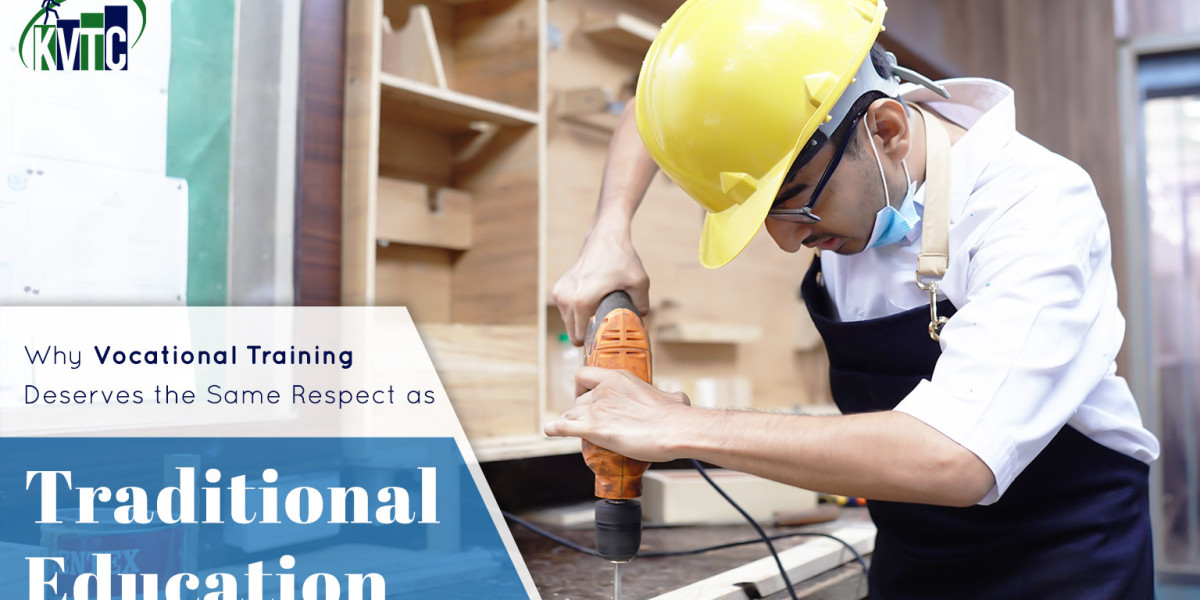

Why Vocational Training Deserves the Same Respect as Traditional Education
Quick Summary:
Vocational training real, job-ready skills deta hai, fast employment aur low cost opportunities ke saath. KVTC jaise institutes skill-based learning se differently-abled individuals ko confidence, independence aur strong career paths provide karte hain. Society ko skilled trades ko bhi academic degrees jaisi hi respect deni chahiye.
For many years, the path to a respected career seemed clear. It involved a traditional education. This education always ended with a four-year university degree. This belief made Vocational Training seem less important. It became a secondary, less-respected option. This societal bias is harmful and unfair. It hurts our global economy. It negatively affects workforce development. It also limits individual potential.
We must challenge this old-fashioned hierarchy. Practical skills are just as valuable. They are taught through vocational programs. These skills often lead directly to successful, in-demand careers. Vocational training truly deserves equal respect.
The Undeniable Value of Vocational Training
Vocational training is also called TVET. TVET stands for Technical and Vocational Education and Training. It focuses on teaching specific, job-ready skills. This training covers many traditional trades. These trades include plumbing, electrical work, and carpentry. It also covers auto mechanics and culinary arts.
Today, it also includes modern, high-tech fields. These fields are IT support and coding. They also include graphic design and health-tech assistance. This practical education offers major benefits for students.
1. Direct Pathway to Employment and Stability
Vocational Training offers a strong connection to jobs. This is one of its biggest advantages. Traditional degrees often give a broad, theoretical base. Vocational programs are different. They are designed with industry needs in mind.
- High Demand for Skilled Trades: Many countries need skilled workers right now. Both developed and developing economies have shortages. This includes workers in all the skilled trades. Vocational graduates find jobs faster. Their unemployment rates are lower. This is often true compared to university graduates.
- Reduced Debt and Cost: Vocational programs take less time to complete. They are usually less expensive, too. Students enter the workforce sooner. They start earning money quickly. Many finish with little or no educational debt. This financial advantage is a huge head start. It results in economic stability in the long term.
- Entrepreneurial Opportunities: Vocational skills create very solid business platforms. A trained mechanic can easily start a garage. A skilled chef can open a restaurant. An electrician can launch a contracting business. These entrepreneurs boost economic growth. They also create new jobs for other people.
2. A Crucial Engine for National Development
A strong national economy needs skilled workers. This is always true. Infrastructure projects need skilled people. Technology sectors need skilled people. Healthcare and manufacturing rely on them too. These sectors cannot function without vocational expertise.
Imagine a city without certified plumbers. What about reliable auto mechanics? Or proficient IT network technicians? Vocational Training programs feed these critical professions. They produce the essential workers of society. They are the builders, fixers, and innovators. The community contribution of a skilled tradesperson is essential. It is just as vital as a CEO or a professor. We must recognize this fundamental importance.
The Role of KVTC in Vocational Training in Pakistan
To see the impact of specialized skills, look at Pakistan. We can study at the Karachi Vocational Training Centre (KVTC). The role of KVTC in vocational training in Pakistan shows great potential. It proves how quality skill development changes lives. It successfully challenges old societal norms.
Empowering Differently Abled Individuals
KVTC is a groundbreaking center in Pakistan. It supports individuals with intellectual challenges. This includes autism and Down syndrome. It also helps those with various learning difficulties. For more than 30 years, we have offered rehabilitation. All our services are provided free of cost. This shows an inclusive model for skill development.
- Holistic Rehabilitation: KVTC uses a complete support system. It offers more than just technical skills. It includes therapeutic interventions. It also features functional academics and sports programs. Trainees grow professionally, socially, and emotionally. They become fully prepared for independent living.
- Market-Valued Skills: KVTC courses are practical and in demand. We teach valuable, marketable skills. These include Kitchen and Culinary Arts. We also offer Carpentry and Arts & Crafts. Students learn Machine Embroidery and other Textile Skills. The culinary training even supports ventures like Café RISE.
- Successful Job Placement: KVTC has an impressive job placement program. This is the ultimate proof of their success. Many graduates now have paying jobs. They work in various major industries. Some are hired by multinational corporations. This success empowers the individuals financially. It also works to dismantle the stigma of disability. It changes what society expects of these citizens.
The vital work of KVTC highlights a core truth. Vocational Training is not a lesser option. It is a highly specialized path. It is often life-changing for many people. It caters to different learning styles and abilities. It is a smart investment in human capital. This is the most valuable resource a nation has.
Breaking Down the Stigma of “Blue-Collar” Work
The lower status of Vocational Training comes from old biases. These biases value white-collar office work more. They treat blue-collar or skilled trades work as inferior. This perception is a dangerous myth. We must actively work to dispel it forever.
Myth vs. Reality in Career Paths
| Myth | Reality |
| Vocational jobs are low-skill and low-pay. | Many skilled trades are complex and specialized. They need deep technical expertise. These include specialized welding and HVAC repair. High demand often pushes salaries up quickly. Master tradespeople often earn more than many degree-holders. |
| University is the only way to advance your career. | Vocational training offers constant skill building. It uses certifications and job experience. Master tradespeople often become leaders. They start their own successful small businesses. They also become specialized industry consultants. |
| Vocational training is only for students who struggle academically. | Choosing vocational training is a purposeful decision. It is for people who love hands-on work. They value tangible results and practical knowledge. It offers a fast, direct route to career satisfaction. It is a rigorous path requiring high intelligence and precision. |
| White-collar work is more intellectual than manual work. | All successful work requires intellect. Tradespeople are expert problem-solvers. They use math, physics, and logic every day. They combine mental acuity with high physical skill. |
The Future of Work is Blended
The lines between the two types of education are fading. Many universities now offer technical degrees. Vocational Training institutes are also adapting. They teach essential soft skills and business management. They incorporate advanced digital technologies into programs. The modern workplace needs both practical expertise and critical thinking. Both educational models successfully build these skills.
The respect given to any job should not depend on a diploma. It should be based on the value the job brings to the community. It should also be based on the dignity it gives the worker.
Conclusion
It is absolutely time for a change in perspective. Leaders, teachers, parents, and students must act now. They must fully recognize the equal worth of Vocational Training. It is as important as a traditional degree.
We should popularize Vocational Training as an initial choice. It needs to be perceived as a premium product. By doing this, we achieve important goals:
- We strengthen our economy. We fill critical gaps for skilled labor.
- We empower every individual. We give them practical skills for stable, well-paid careers.
- We build a culture of respect. We honor all forms of essential, honest work.
Moreover, KVTC is doing vital work. We are pioneers for skills, inclusion, and empowerment. Our success shows the power of practical skill development. The hands-on approach is truly deserving of our highest respect. The future world needs both deep thinkers and skilled makers. We must honor them both equally.
Find out more about us: Karachi Vocational Training Centre for Persons with Special Needs